Tag Archives: documentary

Decoding XR: from VR to dome adaptation

In 2018, IDFA DocLab launched a partnership with the Artis Planetarium to present dome-based immersive artworks during the festival. Some selections are expressly designed for dome projections, while others are installation or headset-based DocLab selections, adapted through an initiative of DocLab, Artis, WeMakeVR and the Netherlands Film Fund. As with any artistic format, there are certain technological, physical and social parameters that affect content, narrative and style design, making it a unique artistic and presentation opportunity.

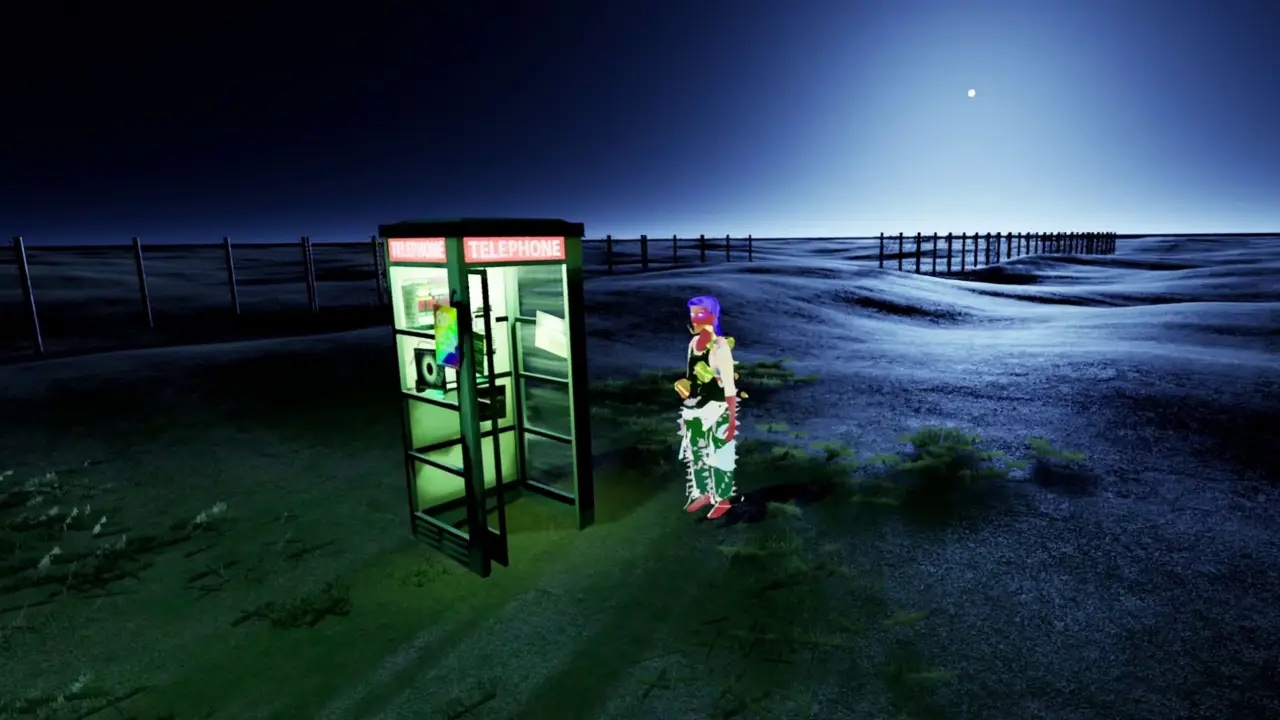
For the 2025 programme, FEEDBACK VR, UN MUSICAL ANTIFUTURISTA was selected for adaptation. I talked to both the two sides of this collaboration – the artist creator Claudix Vanesix and WeMakeVR’s Avinash Changa – about adapting FEEDBACK from VR headset to dome projection and the general approach to creating art works for a dome. The conversations happened separately, but I edited together for flow.

Avinash Changa – Years ago, Caspar [Sonnen] had this idea about the dome of the planetarium – isn’t that just a giant headset that we could put people in? I get the thought, but it doesn’t really work like that, because you only have half of the headset. When you’re wearing a VR headset, you simply look everywhere, especially below the horizon. We can’t just convert the file to play in the dome – that’s just not the case, because from technical, creative, narrative perspective, from an interaction perspective, from an embodiment and sense of presence perspective, all of these things are fundamentally different. So, technically, yes, it’s half of a really big headset, but it’s also not in many ways.

No one really had any inkling, any idea what the consequences would be of taking a piece from a VR headset to a dome. Would it work? We did not know if the experience would make sense to the audience, would be enjoyable? Would the narrative come across, versus content that was designed specifically a dome type presentation?

continue…

originally published on XR Must
At DOK: a deep dive into Leipzig’s DOK Neuland and DOK Exchange programmes

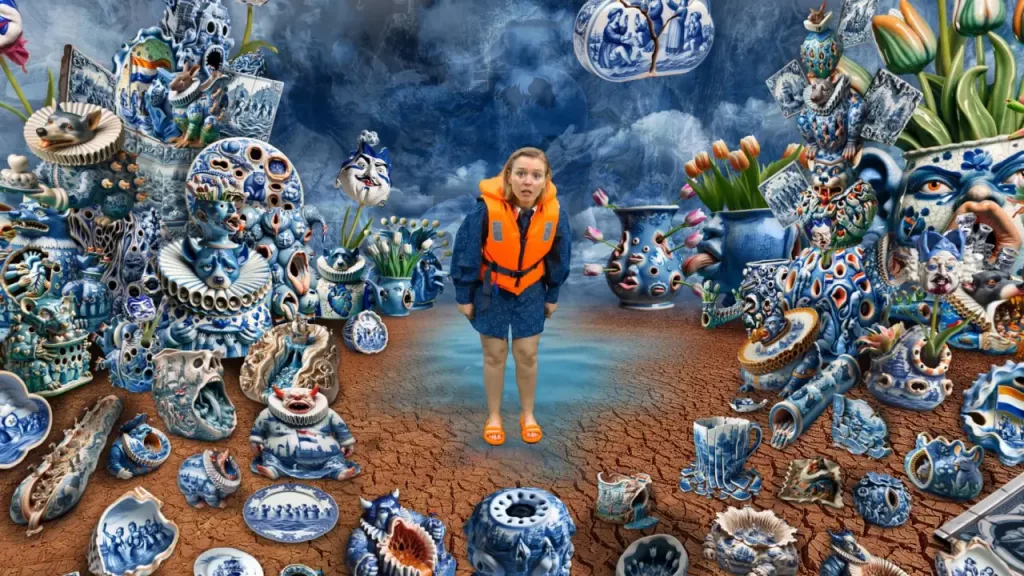
REVIVAL ROADSHOW by Anne Fehres and Luke Conroy

The DOK Neuland XR exhibition and DOK Exchange conference, taking place as part of DOK Leipzig (27 October – 2 November), explore the realities and future of XR. DOK Neuland, curated by Dana Melaver, is a public showcase of XR projects, performances and workshops and DOK Exchange XR, curated and coordinated by Weronika M. Lewandowska, is an industry programme, with critical discussions, a prototyping zone and development showcase.

We spoke to them about their respective programmes and how they are intertwined and complement each other.

W.L. – The themes for DOK Neuland and DOK Exchange are different, but also somehow connected. We’ve always collaborated, and this year we collaborated more.

D.M. – We’re interested in similar things, have similar visions for what a sustainable XR community looks like. We come together, but we arrive at similar intersections from different roads.

Immaterial [the 2025 DOK Neuland theme] is something that was percolating, and then as the projects came in, it just made more and more sense.

W.L. – Our themes are integrated in the idea to bring a bigger picture to what is happening right now in XR.  It was very crucial that Dana was part of our pre-selection process for XR in development, the showcase and the prototyping zone.  We were in dialogue about it. One of our past projects in the prototyping zone, REVIVAL ROADSHOW, is presented this year at Neuland. We see it can be good to find new projects at the prototyping stage which could be interesting to curators. I am also focused in the DOK Exchange XR program on digital literacy and next generation of creators and audiences, how this audience will develop and how we can support young creators to develop critical skills in a time when fiction and reality blurs.

Our inner discussion is also visible in our podcast episode – where Dana is a guest with Prodromos Tsiavos from the Onassis Foundation – where we share similar thoughts about what is important in ethical design and that we take care of the next generation in our programs.

continue…

originally published on XR Must
“You Can Cheat on Reality”: Emeline Courcier on Her Immersive Artwork ‘Burn From Absence’

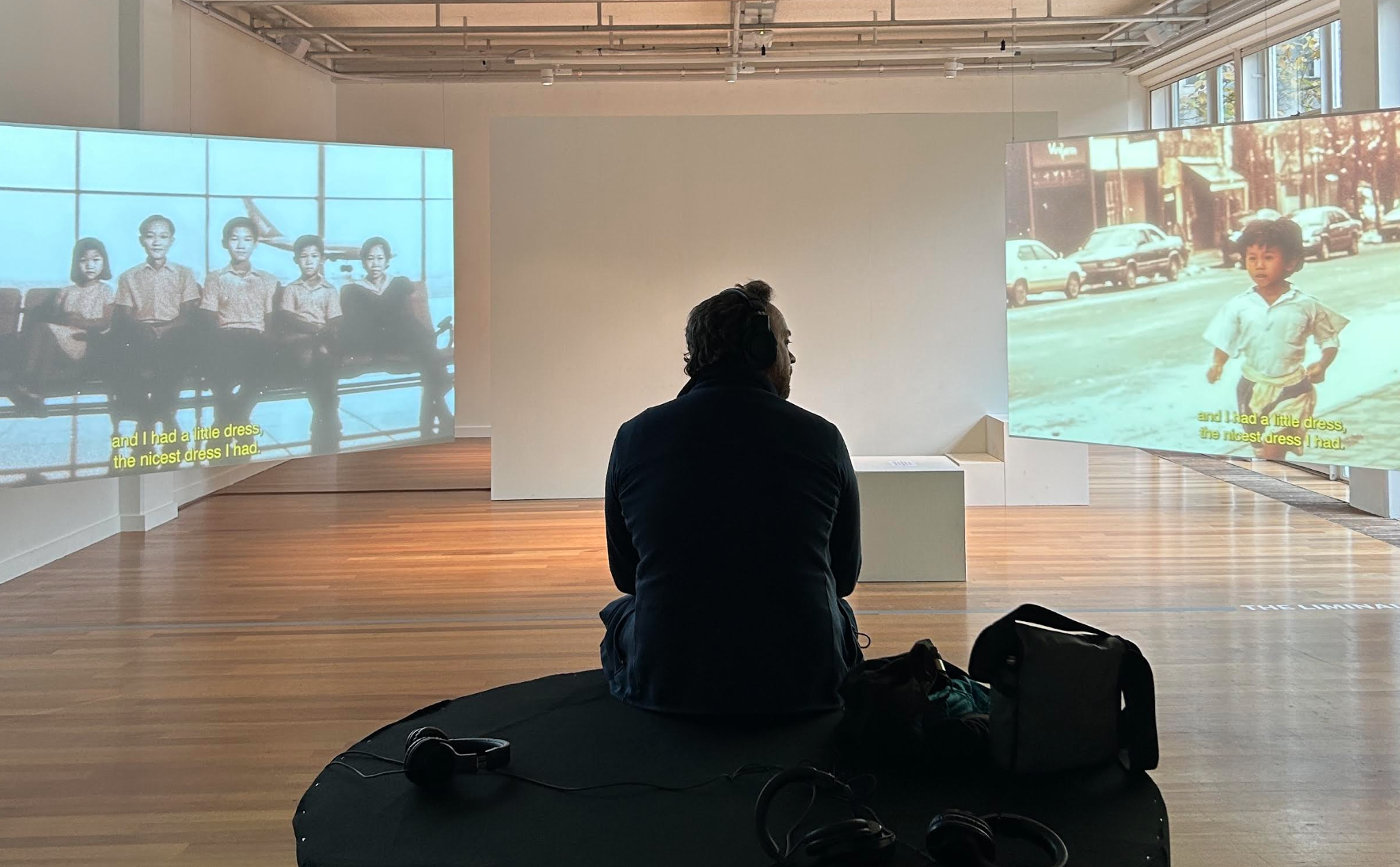
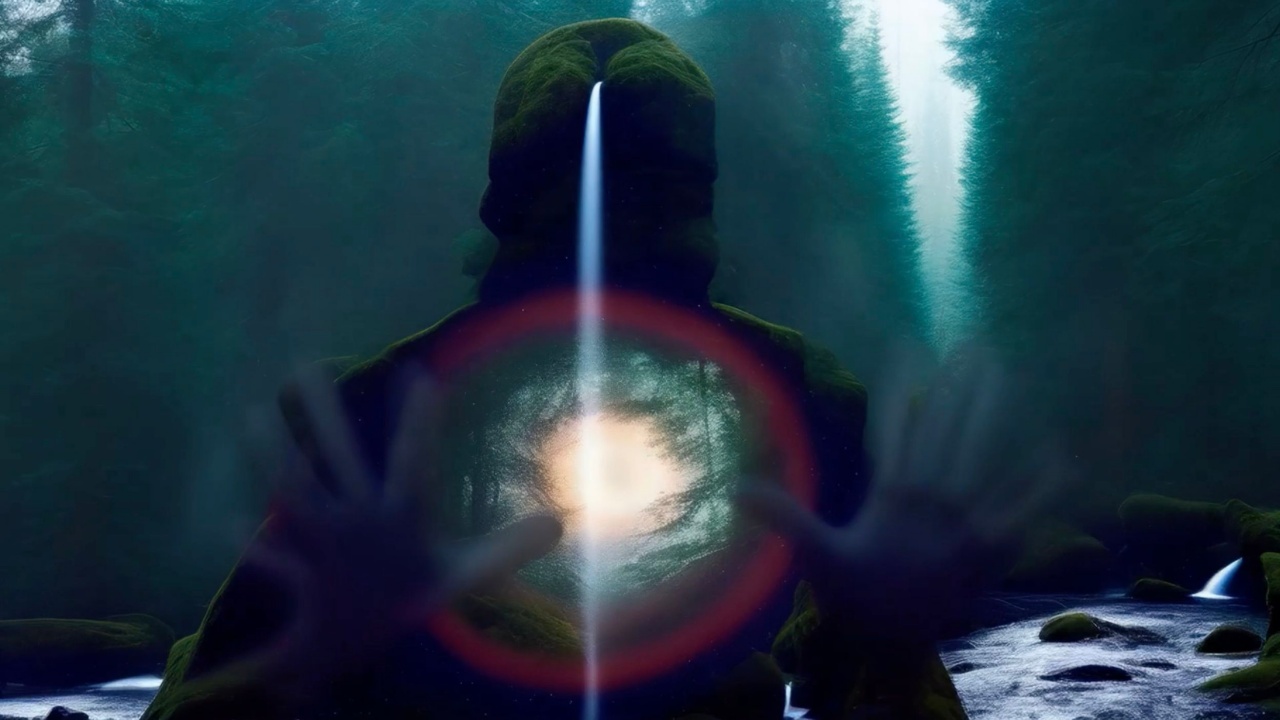
For her immersive artwork Burn From Absence, artist Emeline Courcier creates an archive where there was none. Using artificial intelligence, she recreates a family album, visualizing and verifying a history that has been hidden, documenting it from her perspective. In the four-channel installation, digitally created images illustrate an audio track layering her family members’ memories of life in Laos, the ‘Vietnam’ war, and new beginnings in France. She produced it during an immersive residency at the Phi Centre in Montreal, which is also serving as the work’s distributor.

While AI usually mines and perpetuates the dominant narrative, Courcier completely upends that, building an archive that is a reckoning and a reclaiming and, despite its AI-creation, very real. After its premiere at IDFA last November, where it won the DocLab Special Mention for Digital Storytelling, Documentary spoke to Courcier about truth, archives, and working with deeply personal material.

Did you always intend to use AI to recreate these memories?

 I think using AI is really the core of the project, but how I treated it really evolved during the process.

In 2023, I had heard about AI, but never used it before. I was opposed to it at first, as a lot of artists were—but I was kind of curious at the same time, because what I like is the fact that you can cheat on reality. 

continue…

originally published on Documentary

“I Will Become My Own Institution”: Alaa Minawi Discusses His Immersive Installation ‘The Liminal’

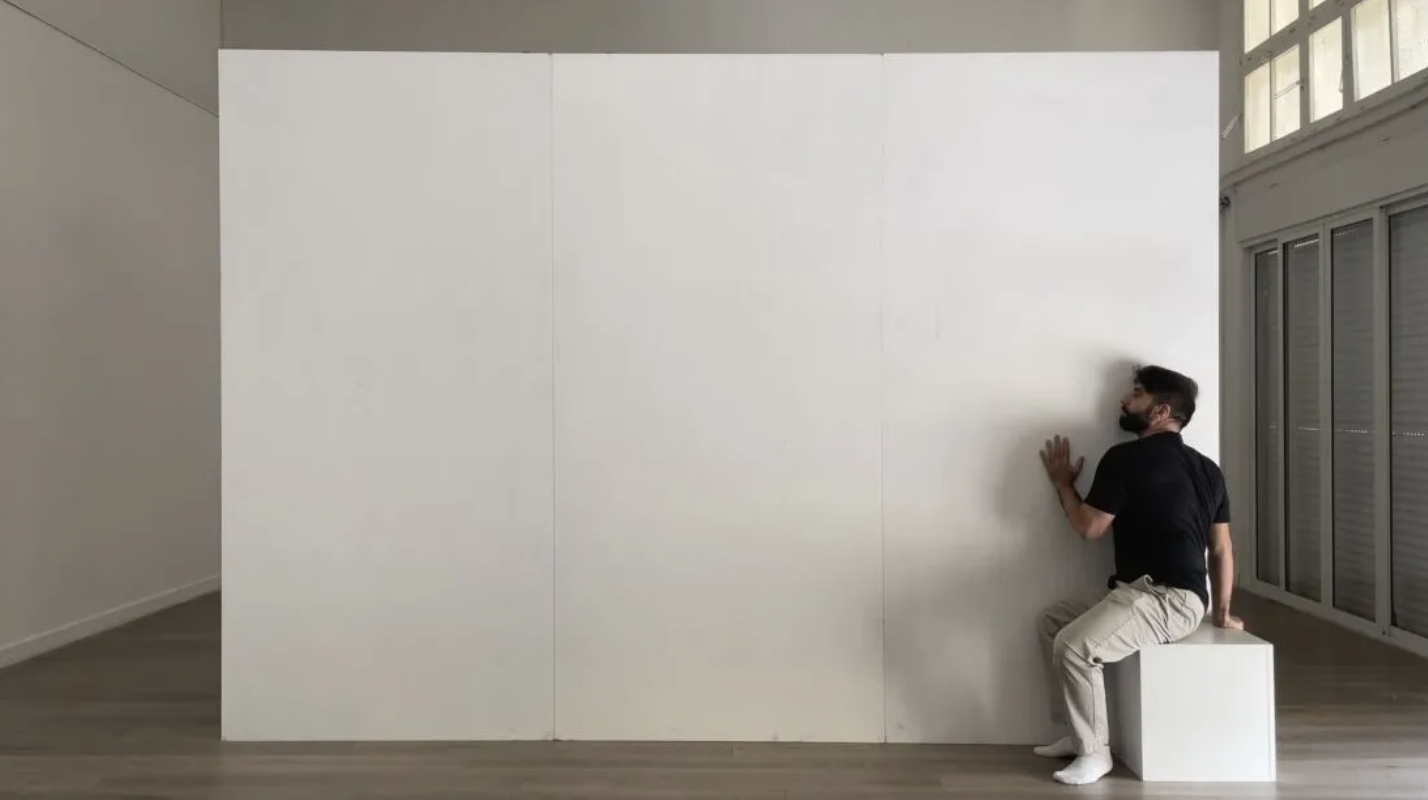
Alaa Minawi’s The Liminal gives an alternative definition of “immersive” from the typical technological, digital one. In his practice, the Palestinian-Lebanese-Dutch interdisciplinary artist explores the possibilities of merging installation and performance art. The Liminal—the first part of his speculative series about Arabfuturism—is a 3.5-meter wall with 24 speakers placed inside, programmed to take the audience on a listening journey.

What seems like a simple white wall is actually a repository of stories of people excluded from traditional power structures, who in turn claim their own spaces and communities “inside the wall.” The piece calls guests to actively listen and bear witness as they move along the wall following the voices, drawing their own physical performance. 

The piece premiered as a work-in-progress at IDFA’s DocLab last year, where it won a Special Jury Award for Immersive Non-Fiction. In an expanded version, which premiered at Spring Performing Arts Festival Utrecht in May 2025, Manawi shifted the documentary stories to fictionalized expressions of reality. Those four stories are written by him and Lebanese writer Raafat Majzoub, three of which are inspired by the original interviews. The last expands on a text previously written by Ibrahim Ibrahim Nehm. Of this exhibit, Minawi said, “I wanted to talk about what has happened, directly, about the genocide and our Arab reality. It was very difficult to find the language, until eventually, I felt that poetic, philosophical language is the best way to deal with what is happening.”

continue…

originally published on Documentary

A look back at IDFA DocLab R&D Summit 2024

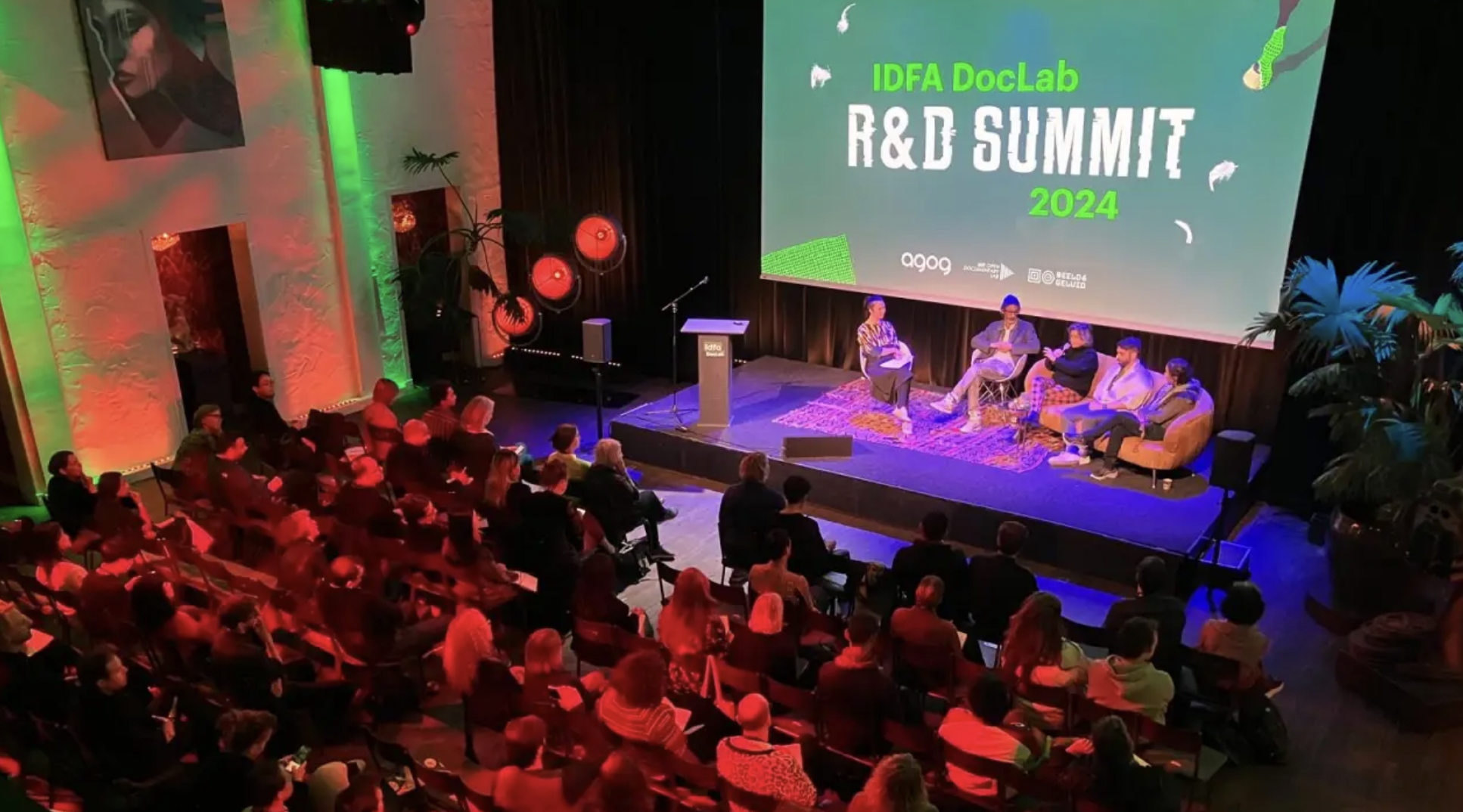
There was an irony at the core of IDFA’s DocLab programme this year. Distribution, which has long been a topic of conversation in the community, was front and center at its day-long DocLab R&D Summit. A difficult discussion for any art form, but as technologies are rapidly changing – both in the software used to create and produce, and the hardware to watch an exhibit – the issue at hand for XR is even more challenging.

DocLab is always experimenting with form (and function) – pushing the boundaries of new media, XR and live performance – so it’s not surprising that the work exhibited reflects creativity and experimentation and ranged from singular to collective experiences. While there was a lot of AI – and technology-influenced work, there were also in-person encounters, architectural installations and many multi-formed pieces. There were less VR-headset based works in the curatorial programme, or being pitched in the DocLab Forum. Which was ironic to me in reflection of the distribution challenges the industry faces. 

But DocLab’s curation gave us opportunities to embrace and ponder those questions.

continue…

originally published on XR Must

Audio is no longer an afterthought

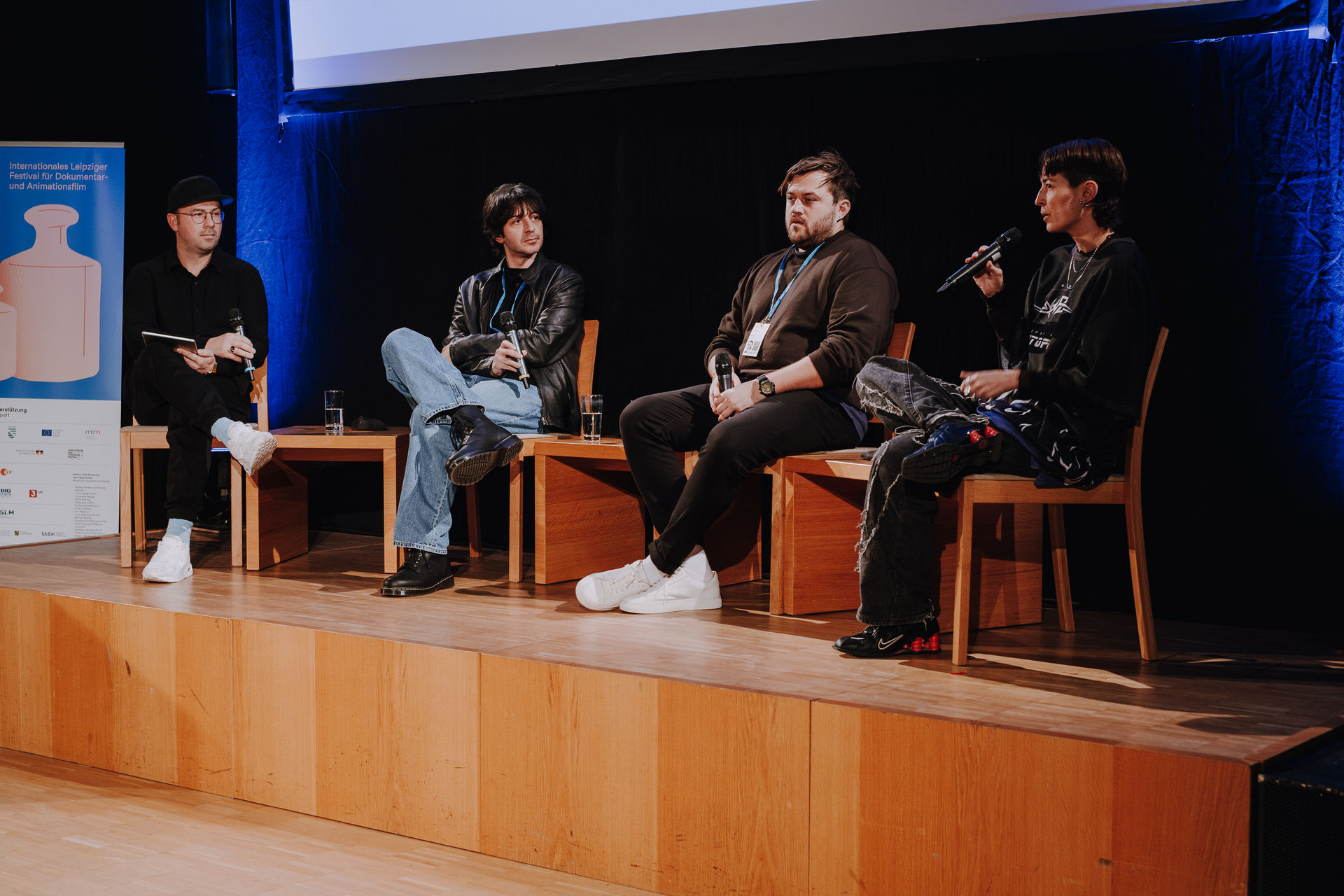
Spatial Sound panel, moderated by Dr. Markus Zaunschirm, with Anan Fries, Shervin Saremi and Oliver Kadel, Photo: Susann Bargas Gomez

In 1989, speaking of virtual reality, Jonathan Carey wrote that “spectacular power cannot be reduced to an optical model but is inseparable from a larger organization of perceptual consumption…The full coincidence of sound with image, of voice with figure, not only was a crucial new way of organizing space, time and narrative, but it instituted a more commanding authority over the observer, enforcing a new kind of attention.

In the last decades, the visual often dominates the conversations around virtual reality, but other senses play a big role in emplacing the experiencer. John Berger might have pushed the ways of seeing, but unconsciously we also we see with our ears.

In XR experiences, we are trying to get as close to putting people in a specific place or situation as possibleThis means either directly recording a scenario/location, or layers the recordings to rebuild a soundscape that reflects “what we hear”. With the emergence of spatial sound recording and other technologies, we now have the ability to capture reality’s sound more closely and to compose soundscapes that are richer, deeper and more complex. In virtual reality and immersive installations, this more advanced audio experience is what can truly make someone feel connected.

Audio is no longer an afterthought, but something to be built into all stages of development and production, and this year’s DOK Exchange XR conference put spatial audio front and center. Here’s a chat with coordinator Weronika Lewandowska about the inspiration, and a reflection on some of the discussions.

continue…

originally published on XR Must

Reality is not a simulation – IDFA DocLab 2024

The DocLab section of the IDFA is a key event for digital creation, in the broadest sense of the term, and returns this year with a new program of excellence, and a professional Forum showcasing future projects in the sector. Caspar Sonnen, programmer since 2007, talks to us about this essential event.

Karen Cirillo – So let’s start with the theme: This Is Not a Simulation.

Caspar Sonnen – DocLab is turning 18 this year, which is a reality check and a great provocation to look around and explore the relationship between art and technology. Technology has allowed us to create unbelievable and truly personalized versions of reality. But having digital access to everything everywhere at once has taken reality out of context, obscuring our perceptions and making it harder to connect with things that we don’t want to see.

Over the years new media, AI and VR have enabled us to step into astonishing new worlds, so much so that some people seriously believe reality might actually be a simulation itself. Something to play with, disrupt and walk away from if we don’t like it anymore.  

But for everyone else, reality is not a game, It is not something we can walk away from. Reality is a shared experience, and in many ways, it is that collective experience of reality that feels increasingly broken.

continue…

originally published on XR Must

A look into Alternate Realities: Sheffield Docfest 2024

Perinatal Dreaming. Understanding Country, by Marianne Wobcke / Big Anxiety Research Centre, Volker Kuchelmeister, Lucia Barrera


The Alternate Realities programme at this year’s just-concluded Sheffield DocFest is pared back, featuring a VR competition, an exhibition and summit in collaboration with the International Documentary Association (IDA). I spoke with Artistic Director Raul Niño Zambrano and co-curators Abby Sun and Keisha Knight about the vision and thoughts behind this year’s immersive experience and its spirit of collaboration.

Raul Niño Zambrano – With Alternate Realities, it has always been a thing asking how do we define it and what do we want? For us, it’s important to see it as an extension. Just as we do for films, we are not looking for one specific type or style. Our responsibility is to show the whole spectrum. We pick up what we think is really worth highlighting. And I think that’s happening also in the XR field, their possibilities are endless. You see how an installation starts as virtual reality, but then becomes an installation, or the other way around. We’re looking at the intersection of art, technology and documentary, and trying to give a message – What are all these pieces saying all together?

For this year’s Alternate Realities programme, you are collaborating with IDA and the programme is co-curated by Keisha Knight and Abby Sun.

Raul – Yes, everything started because of Experimental Realities, a workshop they did in the USA asking a group of emerging artists about the future of immersive. When we talked, we thought it resonated a lot and was a good match.

One of the big questions was how do we see immersive media in the future? What does immersive really mean? Of course it has to do with technology and media, but what happened when we tried to distance a bit from that, we found that you come more to embodiment and to the senses and to haptic. I also felt that that was resonating with our film program; our tagline this year is Reflections on Realities.

continue…

originally published on XR Must

DOX:EXCHANGE: documenting change in restrictive environments

Making documentary films and nurturing an ecosystem is not easy for most filmmakers, but in Belarus and Georgia, filmmakers encounter hurdles outside of the usual production/funding/distribution challenges.

Both countries have a growing documentary filmmaking communities and a mostly self-made industry infrastructure. Challenging political situations on the ground and increasingly restricted arts environments have closed screening venues, discouraged the use of public spaces and limited support to only «approved» topics.

As is often the case in countries facing challenges with freedom of expression, filmmakers are moved to make films about political and social issues. But the same society and environment they’re exploring makes it increasingly difficult to create and show those films. Both Belarus and Georgia are struggling with the tightening of civil society, diminishing funding, and straining democracy (along with protests in response). As countries on the periphery of the EU (and with Georgia on the EU accession path), issues of democracy are front and centre.

In this context, CPH:DOX piloted the DOX:EXCHANGE programme to foster conversations and share knowledge between film organisations in the two countries – CinéDOC-Tbilisi (Georgia) and Northern Lights Nordic-Baltic Film Festival (Belarus) – and the Danish festival. Funded by the New Democracy Fund, the programme was intended to strengthen the landscape of civil society participation and facilitate democratic dialogue through film.

continue…

originally published on Modern Times

Back from IDFA DocLab: 30 pieces of Phenomenal Friction

Phenomenal friction. When the New Media team at IDFA came up with this title, they knew it would reflect a recognition of tensions around the world, but the team had no idea that it would land in the midst of a war and public outcries that stirred up the festival, leading to several filmmakers – including immersive makers – pulling their work from showcase.

Phenomenal friction, as described by Caspar Sonnen, head of New Media, reflects a landscape where emerging technologies are changing how we see the world around us, but also one where we are still encountering and challenging each other’s identities and mindsets in the physical space.

This year’s DocLab and immersive exhibition brought together over 30 pieces from the most diverse set of artists and makers thus far, allowing the audience to encounter worlds not just different from their own, but also created by those living in the other worlds.

continue…

originally published on XR Must