
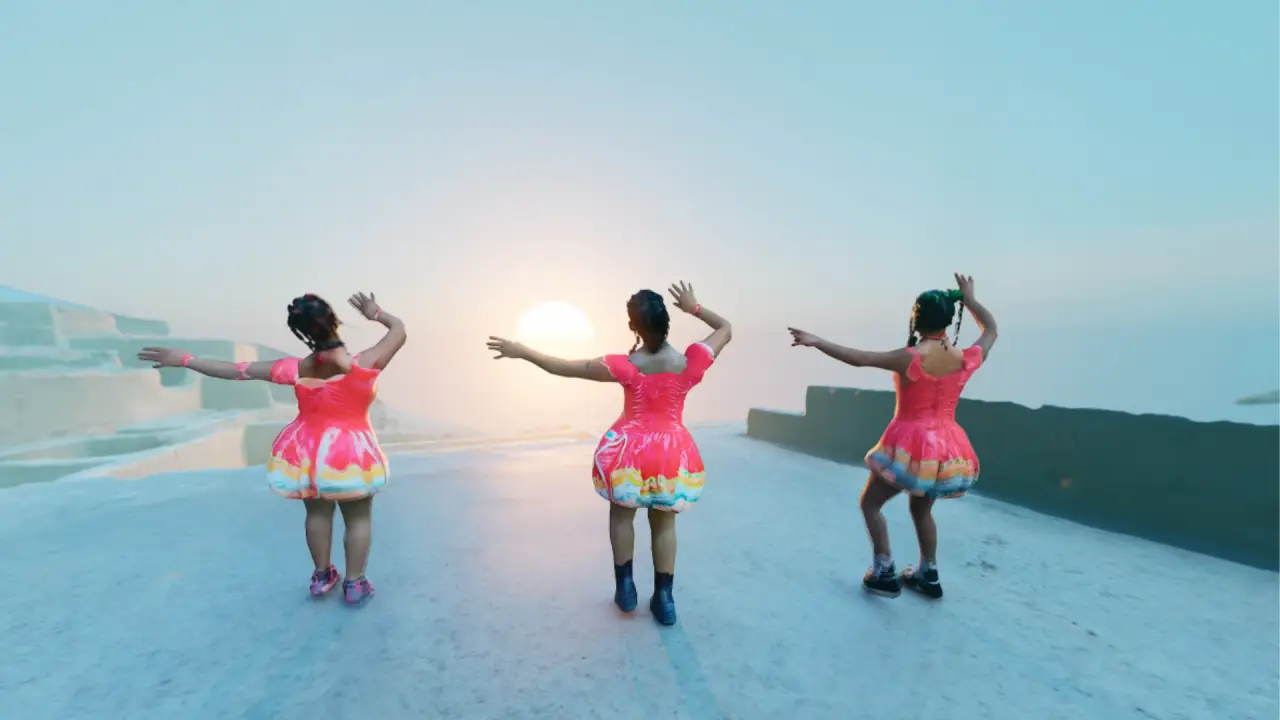
In 2018, IDFA DocLab launched a partnership with the Artis Planetarium to present dome-based immersive artworks during the festival. Some selections are expressly designed for dome projections, while others are installation or headset-based DocLab selections, adapted through an initiative of DocLab, Artis, WeMakeVR and the Netherlands Film Fund. As with any artistic format, there are certain technological, physical and social parameters that affect content, narrative and style design, making it a unique artistic and presentation opportunity.
For the 2025 programme, FEEDBACK VR, UN MUSICAL ANTIFUTURISTA was selected for adaptation. I talked to both the two sides of this collaboration – the artist creator Claudix Vanesix and WeMakeVR’s Avinash Changa – about adapting FEEDBACK from VR headset to dome projection and the general approach to creating art works for a dome. The conversations happened separately, but I edited together for flow.
Avinash Changa – Years ago, Caspar [Sonnen] had this idea about the dome of the planetarium – isn’t that just a giant headset that we could put people in? I get the thought, but it doesn’t really work like that, because you only have half of the headset. When you’re wearing a VR headset, you simply look everywhere, especially below the horizon. We can’t just convert the file to play in the dome – that’s just not the case, because from technical, creative, narrative perspective, from an interaction perspective, from an embodiment and sense of presence perspective, all of these things are fundamentally different. So, technically, yes, it’s half of a really big headset, but it’s also not in many ways.
No one really had any inkling, any idea what the consequences would be of taking a piece from a VR headset to a dome. Would it work? We did not know if the experience would make sense to the audience, would be enjoyable? Would the narrative come across, versus content that was designed specifically a dome type presentation?
originally published on XR Must